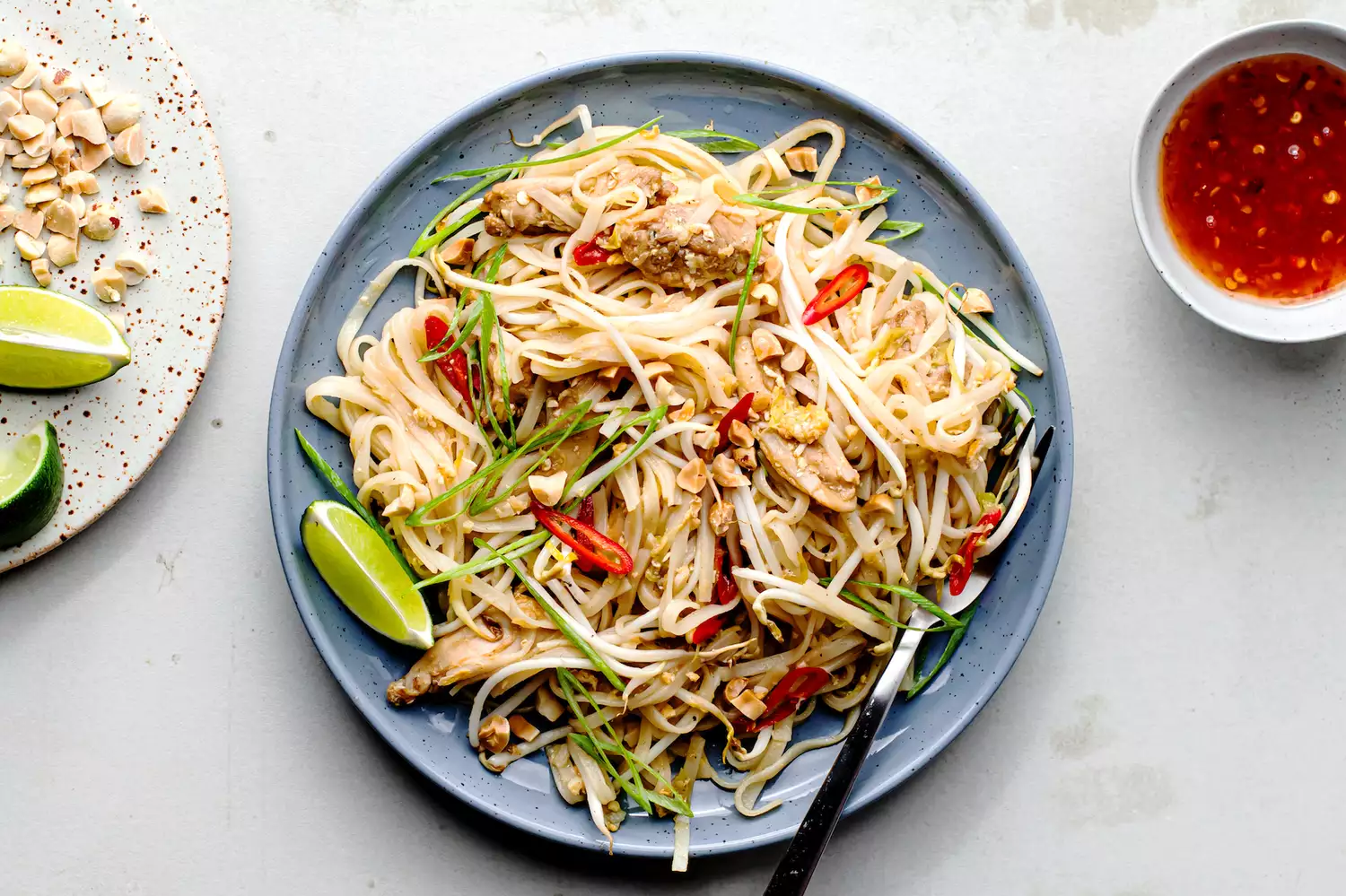
Ingredients
For the Chicken:
- 3/4 pound boneless chicken thighs, or breast, cut into small pieces or strips
- 1 1/2 tablespoons soy sauce
For the Sauce:
- 1/3 cup chicken stock
- 3 tablespoons rice vinegar, or white vinegar
- 1 tablespoon lime juice
- 3 to 4 tablespoons brown sugar
- 2 tablespoons fish sauce
- 1 tablespoon soy sauce
- 1/8 teaspoon white pepper
For the Pad Thai:
- 9 ounces pad thai rice noodles
- 2 tablespoons vegetable oil
- 4 cloves garlic, minced
- 1 fresh red or green chile, sliced
- 1 thumb-sized piece galangal or ginger, grated
- 4 green onions, sliced, divided
- 1 large egg
- 2 to 3 cups bean sprouts
- 1 lime, cut into wedges, garnish
- 1/3 cup roasted unsalted peanuts, or cashews, ground or roughly chopped with a knife, garnish
- Fish sauce or Thai chili sauce, optional
- Steps to Make It
- Gather the ingredients.
:max_bytes(150000):strip_icc():format(webp)/chicken-pad-thai-without-tamarind-3217100-step-01-632289221c3442be936f292f45b5762f.jpg)
- Place the chicken in a bowl and toss with the soy sauce. Set aside.
:max_bytes(150000):strip_icc():format(webp)/chicken-pad-thai-without-tamarind-3217100-step-02-09c7aaca8fa346728a5181bf8a976f00.jpg)
- Combine the pad thai sauce ingredients together in a cup, stirring well to dissolve the sugar. Set aside.
:max_bytes(150000):strip_icc():format(webp)/chicken-pad-thai-without-tamarind-3217100-step-03-0a9514bc983b4039a0ab23145a129278.jpg)
- Bring a large pot of water to boil. Dunk in rice noodles and switch off the heat. Allow the noodles to soak approximately 6 minutes, or until they’re soft enough to bend easily but still firm and undercooked by regular standards. (This is the key to good pad thai, so be sure not to over-soak or boil the noodles. They will finish cooking later.)
:max_bytes(150000):strip_icc():format(webp)/chicken-pad-thai-without-tamarind-3217100-step-04-fba5a7775af440e2aeec65bc7a422922.jpg)
- Drain and rinse the noodles briefly with cold water to keep them from sticking. Set aside.
:max_bytes(150000):strip_icc():format(webp)/chicken-pad-thai-without-tamarind-3217100-step-05-f6b303e3550d4c7bbcbe3156915bd9a3.jpg)
- Heat a wok or large frying pan over medium-high heat. Drizzle in the oil and swirl around, then add the garlic, chile, galangal or ginger, and half of the green onions (or just the white parts), reserving the rest for later. Stir-fry for 1 minute to release the fragrance.
:max_bytes(150000):strip_icc():format(webp)/chicken-pad-thai-without-tamarind-3217100-step-06-e5fe8777802e4e67879f9769c877699f.jpg)
- Add the chicken and stir-fry for 3 to 4 minutes, or until cooked. If the pan becomes dry, add 1 to 2 tablespoons of the pad thai sauce, just enough to keep the ingredients frying nicely.
:max_bytes(150000):strip_icc():format(webp)/chicken-pad-thai-without-tamarind-3217100-step-07-3531370a10824337902322d3d64bfa2e.jpg)
- Push the ingredients to one side and crack an egg into the center of the pan. Stir quickly to scramble, then combine with the other ingredients.
:max_bytes(150000):strip_icc():format(webp)/chicken-pad-thai-without-tamarind-3217100-step-08-65b99641a81b4e45a5f5ad9700fbbc6d.jpg)
- Add the prepared noodles plus 3 to 4 tablespoons of the pad thai sauce. Using 2 utensils, lift and turn the noodles to stir-fry and combine with the other ingredients. Continue frying in this way, adding more of the sauce every minute or two, until all of the sauce has been added and the noodles are chewy and a little bit sticky, 8 to 10 minutes. When the sauce has been absorbed and the noodles are cooked, fold in the bean sprouts (you want them to stay crispy).
:max_bytes(150000):strip_icc():format(webp)/chicken-pad-thai-without-tamarind-3217100-step-09-4981b1f4d5f84da3abccd05b033b5400.jpg)
- Remove the pan from the heat and taste-test; if you like your pad thai a bit on the salty side, add 1 to 2 tablespoons fish sauce.
:max_bytes(150000):strip_icc():format(webp)/chicken-pad-thai-without-tamarind-3217100-step-10-d4c40ea8876d46d7a80e296b5e7e12eb.jpg)
- For those who like it extra spicy, serve with Thai chili sauce on the side. Garnish with lime wedges and crushed unsalted peanuts or cashews. Enjoy.
:max_bytes(150000):strip_icc():format(webp)/chicken-pad-thai-without-tamarind-3217100-step-11-3883ed55cbde4e4cbb62ac025faadb9c.jpg)
- Tips
- Pad thai sauce needs to taste sweet first, followed by sour and then salty to create a good pad thai. Adjust the sauce ingredients if needed.
- Use wheat-free soy sauce for gluten-free diets.
Leave a Reply